

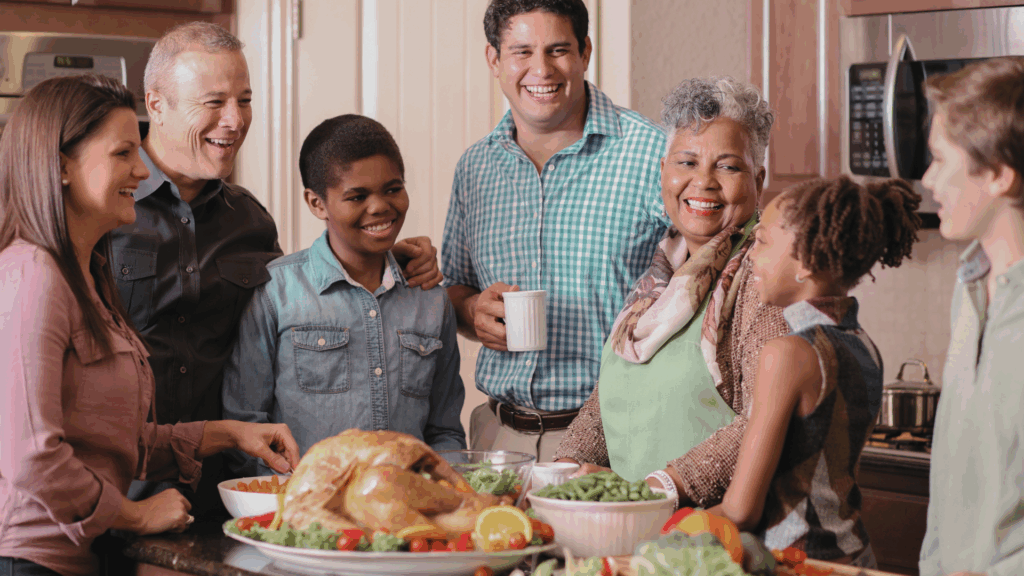
Your first sober Thanksgiving can feel like a final exam you didn’t study for. The holiday is a gauntlet of triggers: complicated family dynamics, direct questions about your absence, and, most obviously, the free-flowing alcohol. For someone in early recovery from a substance use disorder, the pressure to be “normal” and “festive” can be a direct threat to your new, hard-won sobriety. But here is the truth: you can get through it. More than that, you can have a genuinely peaceful and positive day. It just requires a plan.
At Serenity at Summit New Jersey, our residential treatment program is designed to equip our clients with the real-world skills necessary to navigate high-risk situations. We believe in a proactive approach. You wouldn’t go into a battle without a strategy, and you shouldn’t go into Thanksgiving without one either.
This is your guide to your first sober Thanksgiving, built on a foundation of boundaries, preparation, and self-preservation.
Why Your First Sober Thanksgiving Is So Difficult
First, it’s critical to validate your anxiety. This is not “just a dinner.” It’s a high-stakes, high-trigger environment. Understanding why it’s so hard is the first step to building your defense plan.
- Triggers Are Everywhere: The holiday is a sensory minefield. It’s not just the sight of a wine bottle; it’s the sound of a cork popping, the smell of beer, or the feel of a particular glass. These cues can trigger a physical craving before your brain even registers it.
- Family Dynamics Are a Mismatch: You have just undergone a life-changing, intensive therapeutic process. You are changing. Your family, however, has not. They are likely to revert to old, familiar patterns. They may treat you with kid gloves (“walking on eggshells”) or, conversely, with suspicion and judgment. This mismatch is stressful.
- The “HALT” Triggers are in Full Force: In recovery, we learn to avoid getting too Hungry, Angry, Lonely, or Tired. Thanksgiving is a day when you are often all four. You wait hours for a meal (Hungry), navigate tense family politics (Angry), can feel misunderstood in a crowd (Lonely), and are exhausted by the social performance (Tired).
- The Emotional Pressure: Thanksgiving is a holiday about gratitude. If you are feeling anxious, resentful, or guilty, this pressure to “just be thankful” can feel inauthentic and add a layer of shame.
Your Proactive Playbook: A 3-Phase Plan for Success
Success on Thanksgiving is not defined by having a “perfect” day. It is characterized by one thing: going to bed sober. That’s it. That is the win. Here is how you do it.
Phase 1: The Pre-Game (The Week Before)
The most important work happens before you ever see a turkey. This is where you set your boundaries and build your “Sober Survival Kit.”
- Conduct an Honest Risk Assessment: Is this event safe for you? Be brutally honest. If your family’s gathering is a chaotic, heavy-drinking, high-conflict event, the strongest and bravest thing you can do is not go. Prioritizing your sobriety over a family tradition is not selfish; it is a profound act of self-preservation. You can schedule a separate, smaller coffee or breakfast with the relatives you truly want to see.
- Have a Plan for Your “Why”: If you do go, know why you are going. Your goal is not “to have fun.” Your goal is “to see my niece,” or “to support my mom,” or “to eat my aunt’s famous pie.” Have a single, clear, positive objective.
- “Bookend” the Event with Support: This is a classic recovery tool. Call your sponsor, therapist, or a sober friend before you go. Tell them your plan: “I’m heading to my family’s house. I’m going to stay for two hours. I’m not going to drink.” Then, make a plan to call them the second you leave to “debrief.” This creates a powerful bubble of accountability.
- Assemble Your Kit:
- Your Own Drink: This is your most important tool. Bring your own festive, non-alcoholic beverage. A sparkling cider, a craft root beer, a seltzer with cranberries. Having this in your hand at all times is your “shield.” It stops people from constantly offering you a drink.
- Your Phone: Make sure it’s fully charged. Have your support network on speed dial.
- Your Exit Strategy: You MUST have your own transportation. Drive yourself. Do not get blocked in. Your ability to leave at any second is your ultimate safety net.
Phase 2: The Main Event (During the Gathering)
You have your plan. Now it’s time to execute. Your goal is to be a peaceful observer, not a stressed-out participant.
- Practice the “Mindful Pause”: If you feel overwhelmed, anxious, or triggered, do not just stand there and take it. Excuse yourself. Go to the bathroom, step outside, or just go to your car for 5 minutes. Take 10 deep, slow breaths. Feel your feet on the ground. Use a grounding technique (name 5 things you see, 4 you feel, 3 you hear). This simple act resets your nervous system, giving you the space to make a calm, rational choice instead of a reactive one.
- Have a “Job”: The easiest way to avoid awkward conversations is to be busy. Be the “helper.” Offer to help in the kitchen, play with the kids, clear the plates, or be in charge of the music. This gives you a sense of purpose and a perfect excuse to walk away from a triggering conversation (“So sorry, I’ve got to go check on the potatoes!”).
- Have Your “No” Script Ready: You will be offered a drink. Be prepared. You do not need to tell your life story. A simple, polite, and firm “No, thank you” is all that is required.
- “No thanks, I’m good with this.” (Holding your own drink)
- “I’m not drinking today.”
- “I’m all set, thank you.”
- If they push (“Go on, just one!”), it is they who are being rude. You are not obligated to engage. Simply repeat, “I’m all set,” and walk away.
Phase 3: The Post-Game (After You Leave)
You did it. You left sober. This is a massive victory. Acknowledge it.
- Make Your Accountability Call: Call your support person as you drive home. Tell them you made it. Celebrate the win.
- Plan a “Reward”: Have a healthy, sober reward waiting for you at home. This could be a favorite movie, a new book, a hot bath, or a pint of your favorite ice cream. This reinforces the new neural pathway that allows you to experience a rewarding outcome after a stressful event, without the need for a substance.
- Go to a Meeting: Many recovery groups host special meetings on Thanksgiving night. Going to one can be a compelling way to end the day, surrounded by other people who understand the battle you just won.
A Note on Dual Diagnosis and Family
This is all much harder if your addiction is tied to a co-occurring mental health condition like anxiety, depression, or trauma. Family gatherings can be a primary trigger for these underlying issues.
This is why our Family Program is so vital. We work to educate families on the fact that addiction is a disease, not a moral failing. If your family is not yet in a supportive place, it is even more critical that you set firm boundaries to protect your mental health.
Your First Sober Thanksgiving is a Victory, Not a Test
At Serenity at Summit, New Jersey, we provide you with the clinical skills (CBT, DBT) and a safe space to prepare for this day. Our premium, private residential treatment is designed to be a sanctuary where you can build this new foundation.
Remember, this holiday is just one day. Your recovery is a lifelong process. Prioritize it. Protect it. And be proud of yourself for walking through it with courage.
Contact us today if you need support to get started.
