

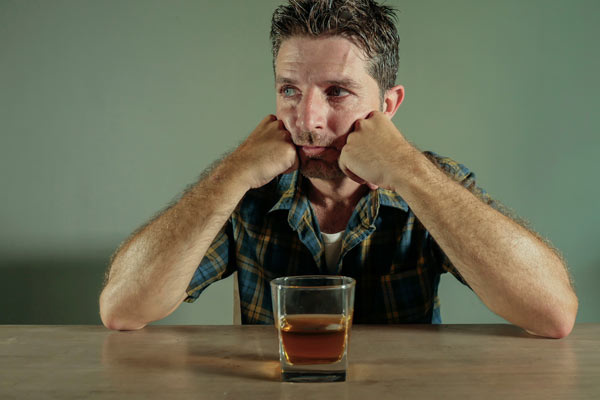
For a person in recovery from an Alcohol Use Disorder (AUD), the holiday season can feel like a nonstop negotiation. Well-meaning friends and family who don’t fully understand the nature of addiction might say, “Go on, just one won’t hurt,” “You’ve been good for so long, you can handle it now,” or “It’s Thanksgiving, you can’t not have a toast!” These seemingly innocent suggestions are built on a profound misunderstanding of addiction. They are built on a myth.
The belief that a person in recovery can one day return to “normal” social drinking is perhaps the single most dangerous misconception about this disease. The idea of “just one drink” is a dangerous myth for people in recovery, and understanding why is critical for both the individual and their support system.
At Serenity at Summit New Jersey, our residential treatment program is rooted in the medical and neurological reality of addiction. We don’t just help our clients stop using; we help them, and their families, understand the fundamental changes that addiction creates in the brain. This education is the armor you need to combat the “just one drink” myth and protect your hard-won sobriety.
The Science of “Why”: The Phenomenon of Craving
To understand why “just one drink” is a myth, we first must understand that addiction is not a moral failing or a lack of willpower. It is a chronic, relapsing brain disease. For a person with a severe Alcohol Use Disorder, the brain’s circuitry has been physically and chemically rewired.
The core concept that separates a “heavy drinker” from a person with an addiction is the phenomenon of craving. This is a medical term for what happens after the first drink.
For a Normative Drinker
A person without an addiction can have one drink. The brain’s reward system lights up, they feel a pleasant buzz, and then the brain’s executive function (the “control center”) sends a clear signal: “That’s enough.” They can just as easily put the drink down as they picked it up.
For a Person in Recovery (with AUD)
A person with an addiction has a faulty “off-switch.” When they take that “just one drink,” it doesn’t just provide a pleasant buzz; it triggers a powerful, overwhelming neurochemical cascade. The “craving” part of the brain hijacks the “control” part of the brain. The first drink is not a choice; it is a trigger that ignites an uncontrollable physiological and psychological demand for more.
The Big Book of Alcoholics Anonymous describes this perfectly: “The sensation of craving is limited to this class and never occurs in the average temperate drinker. These allergic types can never safely use alcohol in any form at all.” While the term “allergy” is a metaphor, the concept is clinically sound.
The response to alcohol in an addicted brain is abnormal, uncontrollable, and fundamentally different from that of a normative drinker. For this person, “just one drink” is like “just one” match to a trail of gasoline. It is the start of the fire, not the end of it.
Deconstructing the Myth: The Psychology of “Just One”
Beyond the physical science, the psychological traps behind the “just one drink” myth are just as dangerous. Believing this myth can set a person up for a devastating relapse.
1. The “I Can Control It Now” Fallacy
After months or even years of sobriety, a person in recovery can feel strong. They’ve rebuilt their life, their relationships, and their health. This strength can lead to a dangerous thought: “I’ve been in control for so long, I’ve learned so much. Maybe I’m ‘cured.’ Maybe I can be a ‘normal’ drinker now.”
This is a cognitive distortion. Addiction is a chronic disease, like diabetes or asthma. You can manage it, put it into remission, and live a beautiful, full life, but you are never “cured” in the way you are “cured” of a cold. A diabetic can’t decide to “just have one” slice of sugary cake without consequences, and a person with AUD can’t have “just one drink.”
Recovery is about accepting this reality, not about one day conquering it so you can return to your old substance. True freedom is freedom from alcohol, not the freedom to control it.
2. The “It’s Not My Drug of Choice” Fallacy
This is a particularly dangerous trap for those in recovery from other substances, like opioids or cocaine. The thought process is: “My problem was heroin, I never had a problem with alcohol. ‘Just one drink’ is fine.”
This line of thinking ignores two critical facts:
- Alcohol Lowers Inhibitions: “Just one drink” is often the gateway to a full-blown relapse on your drug of choice. The first thing alcohol does is impair your judgment and lower your inhibitions. After that one drink, your resolve weakens, your “why” becomes blurry, and calling your old dealer suddenly seems like a good idea.
- Cross-Addiction is Real: Addiction is not about a specific substance; it’s about a faulty reward system in the brain. The brain learns to seek out intense dopamine floods. A person in recovery is highly vulnerable to transferring their addiction from one substance to another. What starts as “just one drink” can very quickly spiral into a new, full-blown Alcohol Use Disorder.
The New Jersey Reality: High Stakes for a “Single” Mistake
Here in New Jersey, the stakes of a relapse are higher than ever before. Our state is still in the grip of a devastating overdose crisis, driven by illicit fentanyl and now, increasingly, the animal tranquilizer xylazine. These substances are not just in heroin anymore; they are being pressed into counterfeit Xanax pills and mixed into cocaine.
For a person in recovery, their tolerance for opioids is gone. If that “just one drink” lowers their inhibitions and leads them to relapse on what they think is a familiar party drug, the risk of a fatal overdose is astronomical.
In this environment, the myth of “just one” is not a harmless social debate; it’s a life-and-death gamble.
How We Help You Disarm the Myth at Serenity at Summit
You cannot fight this battle with willpower alone. You need a new set of tools. At Serenity at Summit NJ, our residential treatment program offers a safe and immersive environment that allows individuals to build these skills from the ground up.
- Evidence-Based Therapies: Through Cognitive Behavioral Therapy (CBT), you will learn to identify cognitive distortions (such as the “just one drink” myth) in real-time. Through Dialectical Behavior Therapy (DBT), you will build the distress tolerance and emotional regulation skills you need to sit with a craving or social anxiety without acting on it.
- Psychoeducation: We provide in-depth education on the neuroscience of addiction. When you truly understand, on a biological level, what happens to your brain when you drink, the “just one” myth loses its power. It stops being a social temptation and becomes a clear, medical fact.
- Family Program Integration: We bring families into the process through our Family Program. A considerable part of this is educating your loved ones about this very myth. When your family understands why you can’t have “just one,” they transform from being a source of pressure to being your strongest allies.
The Power of a Therapeutic Sanctuary
Learning these new cognitive skills can be challenging, especially when the daily triggers and pressures of your home environment still surround you. A residential setting provides a crucial “bubble” of safety and focus. At Serenity at Summit, you are removed from the high-pressure social and professional environments of the New Jersey/New York metro area. You are in a 24/7 therapeutic community where your new, sober identity is the norm.
This immersive environment allows you to practice these skills with therapists and peers, building your “muscle memory” for recovery. It breaks the “I can control it” fallacy by showing you that true control comes from building a life where you no longer need to. By the time you are ready to face the outside world, your understanding of your recovery is no longer a fragile idea; it has become a core, unshakable part of your new identity.
Embracing a New Freedom
The “just one drink” myth is a dangerous myth for people in recovery because it promises a “normalcy” that was never actually healthy for them. True recovery is not about returning to the past. It’s about building a new, better, and more authentic future—a future where your joy, your connections, and your peace are not dependent on a chemical substance.
If you or a loved one is ready to break free from the cycle and learn the skills to build a lasting, sober life, we are here to help.
Our compassionate team is available 24/7 to provide a confidential consultation and verify your insurance.
Contact Serenity at Summit New Jersey today.
