

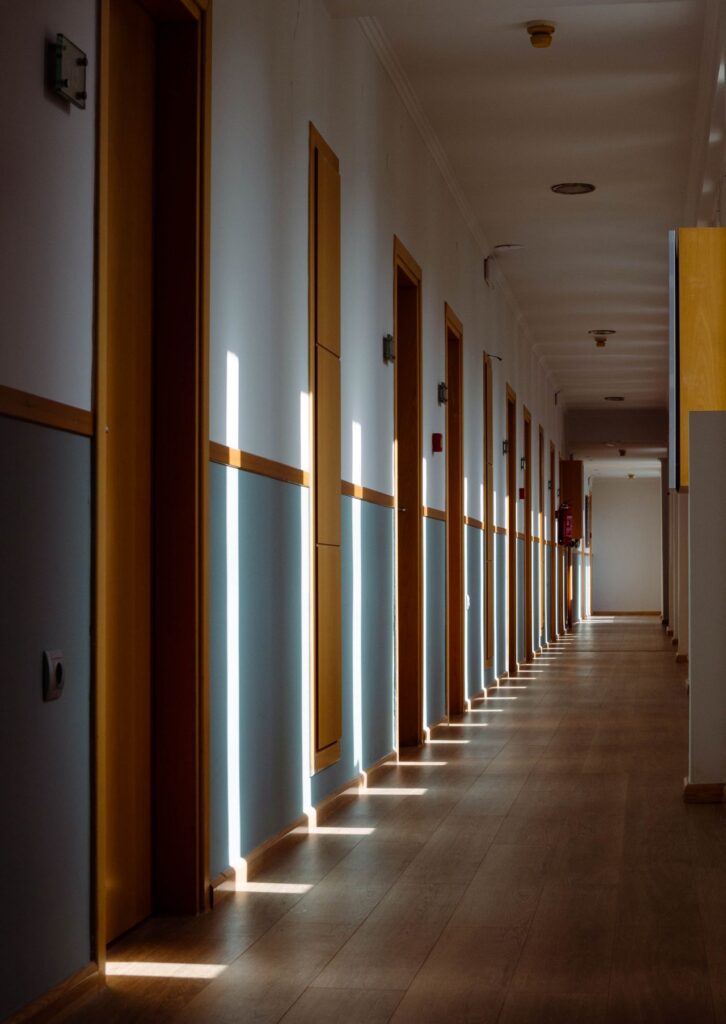
People picture residential treatment as either a hospital ward or a retreat. A real day is closer to a structured school day with a medical team down the hall, and the structure is part of the treatment.
One of the most common questions admissions hears is simple: what will I actually be doing all day? It comes from the person deciding whether to go, and just as often from a mother in Elizabeth or a husband in Methuen trying to picture where someone they love will be sleeping tonight. Not knowing makes the decision harder than it needs to be.
At Serenity at Summit, residential treatment follows medical detox, and in Union, New Jersey a person moves from one to the other without leaving the building. In Haverhill, Massachusetts the residential step is Clinical Stabilization Services, the state’s term for live-in care with a full therapy schedule. Daily schedules vary by campus and week, and each person’s schedule reflects their individual assessment and treatment plan.
Why Residential Days Are So Structured
By the time someone enters treatment, the days have usually lost their shape. Sleep comes at odd hours, meals get skipped, and time bends around getting, using, and recovering. A predictable schedule helps the brain and body readjust to regular sleep and meals.
The National Institute on Drug Abuse describes effective addiction treatment as addressing the whole person, not just drug use, and as often combining medication with behavioral therapy. A residential day is built to do that in one place: medical care, therapy, education, rest, and food, every day, with clinical and nursing staff on site.
A Typical Day, From Morning to Night
Early Morning: Vitals, Medication, and Breakfast
The day starts with nursing. Staff check vital signs, ask how the night went, and give scheduled medications. For someone a few days out of detox, this check matters: sleep is often still broken, appetite is uneven, and lingering withdrawal symptoms such as anxiety or restlessness can shape the whole day if no one asks about them.
Breakfast follows. Regular meals sound minor, but many people arrive underweight, dehydrated, or with stomach problems from months of heavy drinking or opioid use, and steady nutrition is part of how the body recovers.
Mid-Morning: Education and Skills Groups
Mornings usually hold group therapy. A clinician may lead an education session on how alcohol changes sleep, why cravings come in waves, or how overdose risk rises after a period without use. Another group might practice a skill, such as riding out an urge for twenty minutes instead of acting on it. Serenity at Summit’s Haverhill program lists relapse prevention, emotional regulation, medical education, motivational enhancement, 12-step introduction, and wellness skills among its group topics.
Midday: Lunch and a Break
There is real downtime in a residential day. People eat together, make calls when the schedule allows, read, or walk. These hours are when a lot of the informal peer support happens: the newer arrival who cannot stop shaking, sitting next to someone three weeks in who remembers that feeling.
Afternoon: Individual Therapy and Planning
Afternoons often hold one-on-one sessions. Individual therapy is where a person works through what they are not ready to say in a group, using approaches such as cognitive behavioral therapy, which links thoughts, feelings, and actions, and motivational interviewing, a counseling style that draws out a person’s own reasons for change. Both are listed among the evidence-based therapies at Serenity at Summit’s two campuses.
Afternoons are also a common time for the practical side of recovery: work leave paperwork, insurance questions, and the discharge plan, which in a well-run program starts taking shape early in the stay rather than in the last few days.
Evening: Recovery Meetings, Reflection, and Rest
Evenings tend to be quieter. Many programs bring in an introduction to 12-step programs and other mutual-support groups, so the first community meeting after discharge is not a step into the unknown. Some people journal or finish a written assignment from therapy. Then the unit settles for the night, with staff still on site.
How Medication Management Fits In
Medication is part of the daily routine. In residential care, medication management means a medical team prescribes, adjusts, and monitors medicines, checking whether they are working, whether side effects are a problem, and whether a dose needs to change as the body stabilizes.
- Medications for addiction: For opioid or alcohol use disorder, medication-assisted treatment with buprenorphine, methadone, or naltrexone may continue from detox into residential care. These medications reduce cravings or block the effects of opioids or alcohol, and SAMHSA describes medication combined with counseling and behavioral therapy as a whole-patient approach.
- Comfort and recovery medications: Some people need short-term help with sleep, nausea, or lingering withdrawal symptoms after detox ends.
- Psychiatric medications: When depression, anxiety, PTSD, or another condition is part of the picture, dual diagnosis treatment means those symptoms are evaluated and treated in the same plan, sometimes with medication.
Medication decisions are individual. The medical team explains what is being offered and why, and the person in treatment has a say, which is part of the trauma-informed approach that shapes how the whole stay runs: clear explanations, real choices, and nothing done without warning.
Where Family Fits In
Most people go home to family after treatment, so the family’s part starts well before discharge.
Serenity at Summit’s family program brings relatives in for education about addiction, group discussion, and role-play on communication and boundary setting. Parents, partners, and adult children learn what the person in treatment is learning. That shared understanding can help during the first weeks back home. Al-Anon, Nar-Anon, and Families Anonymous are encouraged for family members who want ongoing support of their own.
Calls and visits follow the policies of each campus and the stage of treatment. The phone question comes up constantly, and the general practice around phone use in rehab is worth knowing before admission. Admissions can explain how it works at Union or Haverhill right now.
Getting There From New Jersey and New England
The Union campus sits in Union County near the Garden State Parkway, Route 22, and the NJ Turnpike, which puts it within a short drive of Newark, Elizabeth, Woodbridge, and much of North Jersey, and reachable from Manhattan for families coming across the river. The Haverhill campus is just off Interstate 495 in Essex County, close to Lawrence, Lowell, and Methuen and a short trip down I-93 or Route 125 from southern New Hampshire towns such as Salem and Derry.
For many people, putting some distance between treatment and the old routine helps. For many families, being close enough to drive in for the family program helps too. Both campuses are set up to offer some of each. Knowing what to bring to rehab makes the first day easier as well.
See What a Stay Would Look Like for You
A schedule on a page only goes so far. The admissions team can walk through what the first week would look like for a specific person, including detox, the move into residential care, and when family can get involved, and none of that requires a decision on the spot. Start with the Serenity at Summit admissions team, or check coverage first through a free insurance verification. Questions asked on someone else’s behalf are welcome, too.
FAQs About A Day in Residential Treatment at Serenity at Summit
It varies by program and by person, but most of a residential day is scheduled, with several group sessions, regular individual therapy, education, and medical check-ins, plus meals and short breaks. The exact mix depends on the treatment plan built from your assessment. Admissions can describe the current schedule at the Union or Haverhill campus before you decide.
Usually, yes, after the medical team reviews them. Prescriptions for conditions such as blood pressure, diabetes, or depression are generally continued or adjusted as needed. Medications with misuse potential get a closer look and may be changed. Bring a current list of everything you take so the team can plan safely from the first day.
Families can take part through Serenity at Summit’s family program, which covers addiction education, communication, and boundary setting, and through calls and visits under each campus’s policy. Families driving in from Union County or the Merrimack Valley can ask admissions how sessions are scheduled so they can plan around work and school.
Sources
- National Institute on Drug Abuse. (n.d.). Treatment and recovery. Retrieved from: https://nida.nih.gov/publications/drugs-brains-behavior-science-addiction/treatment-recovery. Accessed on October 20, 2026.
- Substance Abuse and Mental Health Services Administration. (n.d.). Treatment options for substance use disorder. Retrieved from: https://www.samhsa.gov/substance-use/treatment/options. Accessed on October 20, 2026.
- American Society of Addiction Medicine. (n.d.). The ASAM criteria. Retrieved from: https://www.asam.org/asam-criteria. Accessed on October 20, 2026.
- National Institute on Alcohol Abuse and Alcoholism. (n.d.). Treatment for alcohol problems: Finding and getting help. Retrieved from: https://www.niaaa.nih.gov/publications/brochures-and-fact-sheets/treatment-alcohol-problems-finding-and-getting-help. Accessed on October 20, 2026.
